
Deepfake Attacks Bypass Infrastructure Entirely and Target the Human Making the Decision
Amarish Pathak, CTO at AAFMAA Mortgage Services, explains why AI-powered deepfake attacks bypass firewalls, MFA, and zero-trust architecture entirely, targeting the human making the decision.
Make The Security Digest one of your go-to sources on Google


Stop thinking about this as a cybersecurity problem. Think about it as a trust-chain problem.

Amarish Pathak
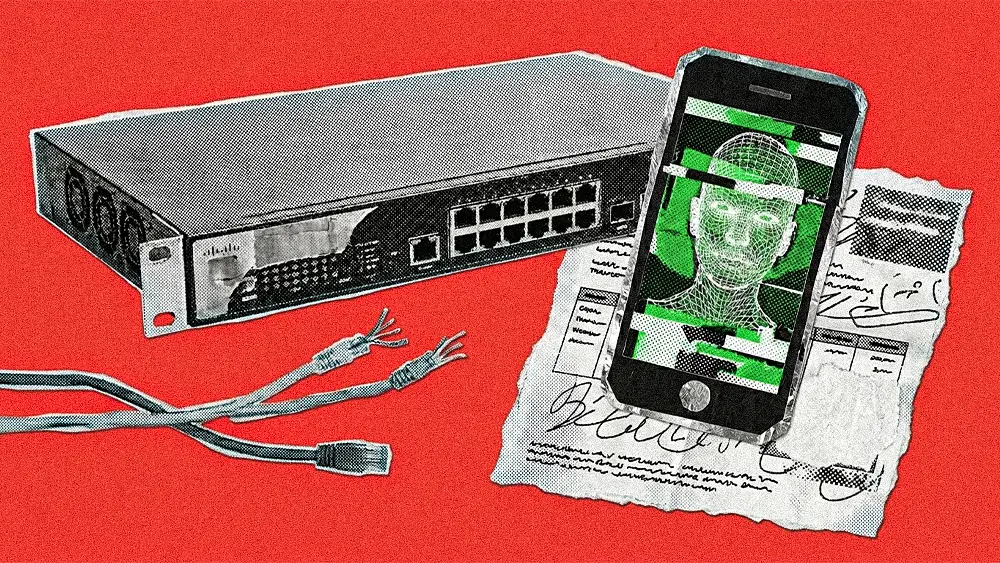
Managed security providers deliver firewalls, endpoint detection, SIEM platforms, and zero-trust architecture. All of it protects infrastructure. None of it protects the person on the other end of a synthetic video call who is being asked to authorize a wire transfer. The next generation of deepfake attacks does not try to penetrate the network. It bypasses the network completely and goes straight to the human operating it.
Amarish Pathak is CTO at AAFMAA Mortgage Services, a DoD-affiliated financial services organization serving American military families. He has spent 19 years delivering cybersecurity and technology solutions in regulated defense and financial environments, holds CISSP, PMP, and CIPM certifications, and has built patented software for anomaly and fraud detection. He frames the deepfake threat not as a technology failure but as a breakdown in how organizations establish and verify trust.
"Stop thinking about this as a cybersecurity problem," Pathak says. "Think about it as a trust-chain problem."
The Arup lesson
Pathak points to the Arup Hong Kong incident as the defining case. Employees attended a video call where every participant except the victim was AI-generated. Every face, every voice, the entire meeting was synthetic. Trusting what they saw and heard, the employees authorized roughly $25.6 million. "It's not a failure of technology," Pathak says. "It's a failure of trust infrastructure."
The immediate rebuttal to deepfake risk has always been: verify on video or voice. That rebuttal no longer holds. "With deepfakes, you can have a video call from anybody. It appears to be somebody you know, but you still need a chain of trust before taking any action," Pathak says. No high-value decision should rely on a single communication channel, including channels that appear to include live human presence.
Salt the conversation
Pathak borrows from cryptography to describe how organizations can build verification into human communication. In cryptographic protocols, "salt" is a random element introduced to defeat man-in-the-middle attacks. In human conversations, the equivalent is shared keywords that only the two parties know, rotated on a regular cadence so that exposure of one keyword does not compromise the channel permanently.
"You and I are friends. We have certain keywords that only you and I know," Pathak says. "If a deepfake comes in, they don't know the keywords. That's how you counteract it." Beyond shared secrets, he advocates for deepfake simulations modeled after the phishing campaigns that security teams already run.
"We have to do deepfake campaigns to make sure that C-suite people, because they have access to money, don't fall into the victimology mentality," Pathak says. He cites survey data showing roughly 60% of organizations have experienced a deepfake attack, while only about 10% of CIOs and CISOs prioritize deepfake recognition in their security awareness programs.
Policy without enforcement
In mortgage and financial services, the exposure runs through regulatory audits and licensing. Pathak's organization is licensed across multiple states, each requiring compliance verification. He has built an AI acceptable-use policy that defines which platforms employees can use and how, and presents it directly to regulators. But he argues most organizations in the industry have policies without the audit infrastructure to enforce them.
"I can guarantee that most of the big players in mortgage or financial services have CIOs and CTOs who just provide a policy," Pathak says. "But there is no audit infrastructure to determine if a developer used ChatGPT to write code and introduced PII on a cloud platform." The gap between policy and enforcement is where the real risk sits, and most companies are waiting for regulatory mandates before addressing it. "Once they get the mandate, you're going to see a whole new paradigm," Pathak says. "But most companies are not even entertaining it because it's so new and they don't have a mandate from the government."
Pathak's prescription starts with culture, not technology. "Technology comes last," he says. "Culture and the human layer come first because that's the one thing every organization can control." The tools and platforms will change. The features will update. The threat vectors will shift. What stays constant is whether the people inside the organization know how to verify trust before they act on it.