

We thank people for carrying extraordinary responsibility. We also need to ask what that responsibility is costing them, and whether we've made it safe to answer honestly.
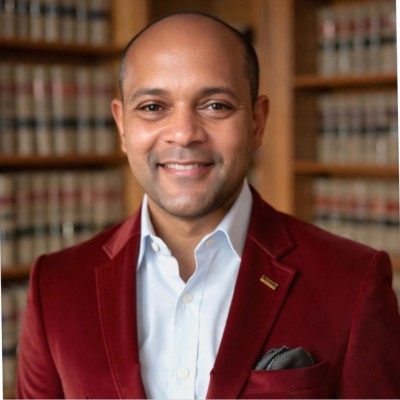
 JoJo D."The Chaos Guru," Cybersecurity Strategist
When the incident bridge has gone quiet and dinner's on the table, part of the attention is still on the unfinished investigation and the phone that might ring again. For the professionals who run cybersecurity and national security operations, making it home isn't the same as being off duty. Organizations pour enormous energy into protecting systems from threats that cross their boundaries, and far less into what crosses the boundary between work and home: the vigilance, the exhaustion, and the underlying expectation that the person everyone depends on will continue carrying the load.
Jothi Dugar and Ty Hughes are Cybersecurity Strategists and co-founders of Chaos & Signal, where much of their work centers on Cyber Wellness. It's a practice that helps organizations protect the human capacity behind cyber resilience. Dugar, known as JoJo D., "The Chaos Guru," is an executive strategist and bestselling author with more than 25 years in the field. Hughes, "The AI Alchemist," is a transformational technologist and a President's Management Council Interagency Rotation Fellow with nearly 25 years of experience working across the technical and human sides of complex change. Both have spent their careers alongside people who shoulder extraordinary responsibility, often under extraordinary circumstances, and they've watched as organizations grow dangerously dependent on the people they consider the most reliable.
Their work raises a question organizations rarely ask out loud. "We thank people for carrying extraordinary responsibility. We also need to ask what that responsibility is costing them, and whether we've made it safe to answer honestly," Dugar says.
The people behind the mission
In summer 2026, news reports described five deaths by suicide among personnel associated with U.S. Cyber Command over roughly five weeks. In October, members of Congress called for an additional $11 million in mental health support for personnel carrying demanding national security missions. Dugar is deliberate about the limits of what that reporting can tell anyone. Suicide is complex, she cautions, and it would be irresponsible to trace these deaths to burnout, culture, operational demands, or any single cause. "These weren't headlines or statistics. They were people whose lives mattered to families, colleagues, and communities. Acknowledging what we can't know shouldn't stop us from asking what we can improve," Dugar says.
In Hughes' view, the organization's dependency itself is a place to start. When someone is always available, always willing to take the difficult assignment, and always prepared to absorb another problem, the instinct is to call it dedication. "If every difficult assignment goes to the person who never says no, we can end up rewarding the concealment of limits," Hughes notes. "Then we act surprised when we discover how much that person was carrying."
The reliability trap
A reputation for handling hard situations can harden into an obligation to keep handling them, and it doesn't land the same way for everyone. The pressure to appear unbreakable tends to split along gender lines, with men and women held to it for different reasons even when the toll looks similar.
For some men, the pressure is reinforced by long-standing expectations about self-reliance and emotional control. A meta-analysis of more than 19,000 participants found associations between conformity to certain masculine norms and poorer mental health and help-seeking outcomes. "It really undercuts the assumption that capable people should be able to manage difficulty alone," Hughes says. Research into so-called "masculinity contest culture" has linked the same workplace expectations to burnout in men and women alike.
Women in security, military, and executive roles face a related bind, where showing any vulnerability can feel professionally risky. "A woman can be praised for being unshakable and still need somewhere to put down the armor. We should be able to lead with authority and receive care without having to defend our competence," Dugar says.
"The problem isn't strength," Hughes adds. "Our work needs resilient, decisive people who can operate under pressure. The problem starts when strength becomes synonymous with silence." The danger is a professional identity that leaves practitioners feeling forced to choose between being respected and being human.
If every difficult assignment goes to the person who never says no, we can end up rewarding the concealment of limits. Then we act surprised when we discover how much that person was carrying.
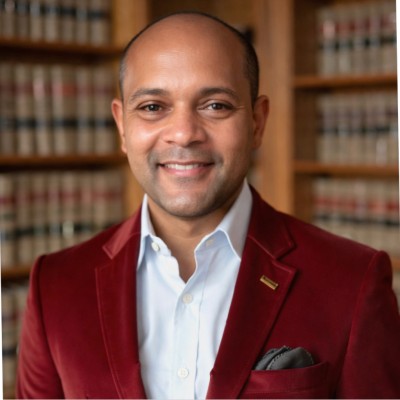 Ty Hughes"The AI Alchemist," Cybersecurity Strategist
Telling people to 'speak up' isn't enough
Most organizations already encourage employees to seek help and insist that no one should struggle alone. Dugar and Hughes treat those messages as a beginning, not an answer. Military research has identified stigma, disclosure, and career consequences as recurring themes in whether personnel seek mental health support, and the real test is what happens when someone acts on the encouragement. Can they get an appointment without navigating obstacles, attend it without justifying the absence to several people, and trust that seeking care won't change how colleagues read their reliability?
For those holding security clearances, there's an added fear. The Defense Counterintelligence and Security Agency has made clear that seeking mental health care does not by itself cost someone their clearance. "The real question isn't whether we've told people it's acceptable to ask for help. It's whether asking for help actually leads to support," Hughes says.
Being home doesn't equal being relieved
The end of a shift is treated as the end of responsibility, but anyone who's led an incident response knows it doesn't transfer that cleanly. A person can leave the building and remain the unofficial decision-maker, hand off a system while keeping the phone close, or take leave while still serving as the team's escalation path. Physically, they're away. Operationally, they never left. Research across broader workforces has tied psychological detachment from work to lower exhaustion and better sleep, which is exactly the recovery an always-on expectation denies. "If the mission still depends on you answering the next alert, you've left the building without being relieved," Hughes asserts. "Recovery needs coverage, a clear handoff, and permission that holds when something gets difficult."
This is where Cyber Wellness becomes an operational concern rather than a slogan. Dugar and Hughes put the premise plainly: people are the most critical infrastructure an organization has. If that's true, then an individual's capacity to recover belongs in how missions are designed. "An organization shouldn't confuse one person's willingness to stay available with proof that the organization is resilient," Dugar says.
What leaders can change
The fix, in their framing, is a different set of questions. When an important person steps away, is there someone else with both the information and the authority to take over? Are escalation conditions clear enough that a person on leave is contacted only when it's genuinely necessary? When sustained operations end, does the after-action review look at what happened to the people who carried the response, and not only at the technical indicators? And when someone asks for relief, how is it read? "Do we treat a request for relief as useful information about our operating environment, or as evidence that someone is less committed than we believed?" Hughes asks.
"A team isn't resilient because its strongest member never stops. It becomes resilient when responsibility, knowledge, and authority can move between people," Dugar says. That's not a lower standard. It's a more sustainable definition of operational excellence, and the real measure of calling people critical infrastructure is what happens when the person everyone depends on finally needs someone else.