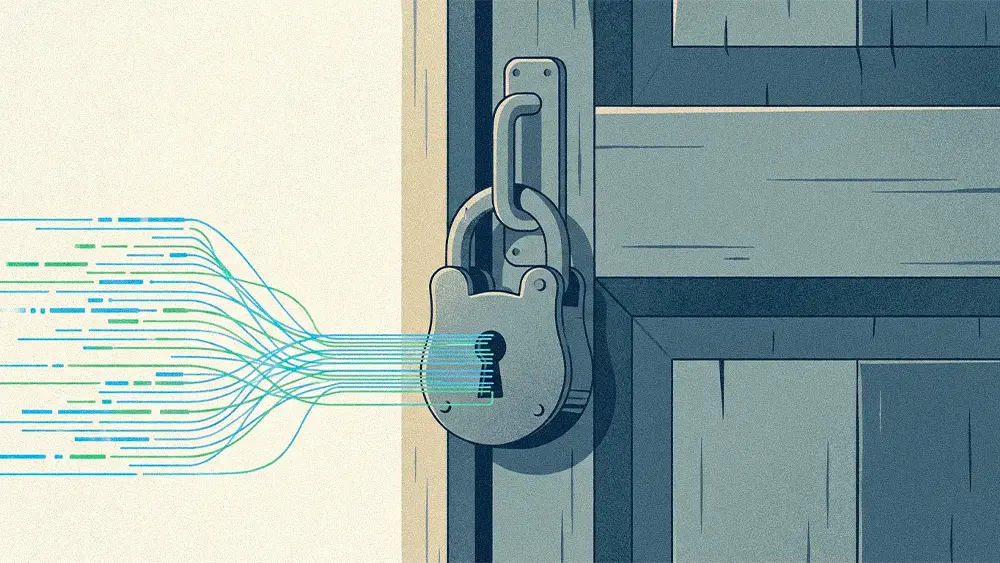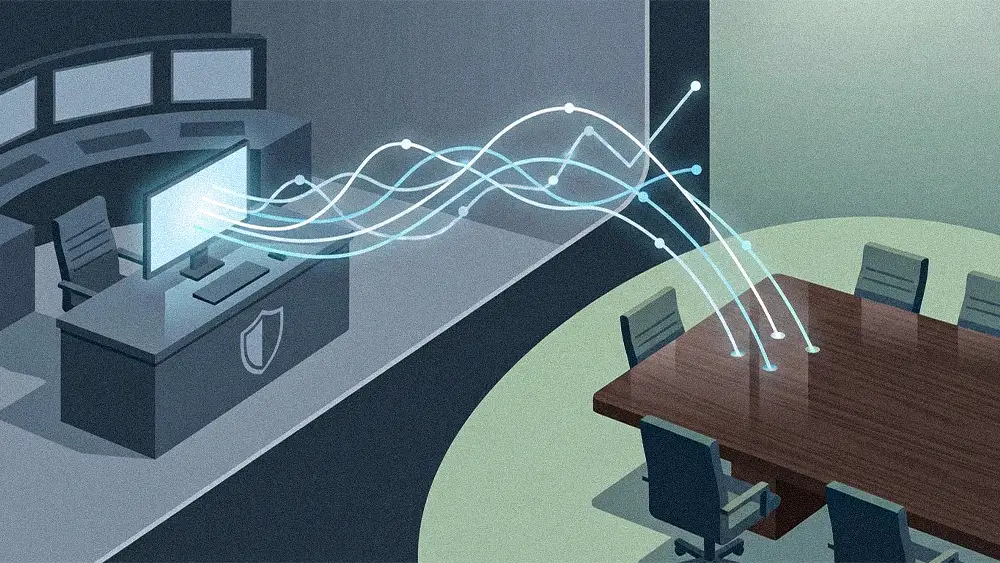


That is the trust tax: the operational and cognitive cost created when employees are repeatedly asked to authenticate reality because the organization has not adequately authenticated the request.
 JoJo D."The Chaos Guru" @ Cybersecurity Strategist
Workplace security training often teaches employees to slow down when something about a message or a call seems off. Generative AI lets attackers produce a convincing impersonation quickly and cheaply, whether it arrives as an email, a text message, a cloned voice, or a faked video call. The signals employees typically use to confirm who they're dealing with, such as a familiar voice, a face on a call, a writing style, or a caller ID, are easier to fake, and a request can now arrive looking and sounding exactly right. Security teams now have to fix the processes that let a single convincing interaction authorize a payment, a password reset, or the release of sensitive data.
Jothi Dugar and Ty Hughes, both cybersecurity strategists, have built much of their work around what they call Cyber Wellness, an approach that counts human and organizational health as part of an organization's security resilience. Dugar, known across the industry as JoJo D., "The Chaos Guru," has more than 25 years of experience as an executive and strategist in organizational transformation, technology, and cybersecurity, and she's also an international bestselling author. Hughes, a transformational technologist widely recognized as "The AI Alchemist," has spent nearly 25 years helping organizations manage the technical and human sides of complex change, and he's a President's Management Council Interagency Rotation Fellow. Their latest work treats AI-enabled impersonation as a problem for an organization's security controls to solve.
"Multiply each judgment call across every suspicious email, unexpected text, MFA prompt, voice call, video meeting, and 'quick favor.' That is the trust tax: the operational and cognitive cost created when employees are repeatedly asked to authenticate reality because the organization has not adequately authenticated the request," says Dugar. Attackers often target the places where a weak business process leaves a consequential decision to a single employee, because those attacks tend to work.
What the voice can authorize
A finance employee on an urgent video call might see a familiar executive ask for a confidential wire transfer. A help-desk analyst might hear from an executive who says they're locked out of an account ahead of an important meeting and can cite the right colleagues and projects. In one long-running campaign, impersonators of senior U.S. officials have used text messages and AI-generated voice messages since at least 2023 to request wire transfers, authentication codes, and personal documents.
Hughes points to what the employee on the other end is able to approve. "A synthetic voice is dangerous because of what the voice is allowed to cause," he says. "A convincing message becomes an enterprise incident when it can reset credentials, change a vendor's banking information, release sensitive data, create privileged access, or trigger an operational change without sufficient independent verification."
The deepfake is not the control failure. The control failure is what the fake was allowed to authorize.
- Ty Hughes, "The AI Alchemist," Cybersecurity Strategist
Business email compromise drew 24,768 complaints and just over $3 billion in reported losses in 2025. Complaints that referenced AI totaled 22,364, with about $893 million in losses, although a reference to AI doesn't mean AI caused the loss. Hughes points to a vendor's banking change that arrives in a genuine, ongoing email conversation. "Replying to that same thread does not independently verify the request if the mailbox itself is compromised," he notes. "A familiar voice calling the help desk does not establish identity if voice can be cloned."
Federal digital identity guidance now requires systems at the middle assurance level to offer a phishing-resistant sign-in option, and requires phishing resistance outright at the highest level. Hughes applies the same principle beyond sign-in, holding that the more a request can set in motion, the less weight an organization should give to an employee's sense that a voice, face, or message seems familiar. "Identity and authorization are related, but they are not the same question," he explains. "Identity asks who is present. Authorization asks what that identity is allowed to cause."
The "quick favor"
Finance analysts, help-desk staff, and IT administrators all field urgent requests from senior leaders, by email, by phone, and on video calls. "When controls are weak, the organization quietly transfers the burden to the employee," says Dugar. "The finance analyst has to decide whether challenging an executive will damage a relationship. The help-desk analyst has to decide whether denying a senior leader's urgent request will affect their reputation."
Dugar warns against answering the pressure on those employees with blanket caution. "If every interaction carries the same warning, every request requires extra approval, and every employee is expected to remain hypervigilant all day, people will adapt," she explains. "They will click through prompts, delay legitimate work, move conversations to unofficial channels, or find workarounds."
Dugar starts from what an employee can reasonably watch for in a working day. "Human attention is finite security capacity," she adds. "Good security does not maximize friction. It concentrates friction where failure matters most."
Outside the conversation
Hughes favors what he calls "consequence-based verification," and under it, routine coordination that touches no money, access, sensitive data, or system change stays fast and simple. Stronger checks apply when a request looks out of the ordinary, comes through an unfamiliar channel, asks for secrecy, carries surprise urgency, or could disrupt operations. "High-consequence actions, like payment changes, account recovery, privileged access, sensitive-data release, or material operational changes, should require controls strong enough to withstand a convincing impersonation," he says.
The controls Hughes has in mind start with calling back on a number the organization already has on file and requiring a second approver. They extend to splitting duties between employees, checking contacts against a trusted directory, phishing-resistant sign-in, waiting periods before financial changes take effect, privileged access granted only for limited windows, and a logged record of every exception. He puts the most weight on the word "independently," and applies it to email, phone calls, and existing conversations alike.
"If a request arrives by email, do not use the phone number supplied in that email to verify it," Hughes advises. "If a caller claims to be an executive, do not rely on facts supplied by the caller as proof." A change requested in the middle of a familiar thread should be checked against a trusted record that existed before the request arrived. "A compromised conversation can validate itself," he adds. "Independent verification has to begin outside the conversation."
In Dugar's view, attackers create urgency on purpose because it shortens the time a target spends thinking, so she gives employees a brief routine for the moment a request feels pressing. She calls it "Pause, Breathe, Summarize, then Verify," and uses it alongside technical controls. "Pause interrupts automatic action," Dugar explains. "Breathe reduces the physiological pull of urgency. Summarize forces clarity: What exactly am I being asked to do? Does this involve money, credentials, secrecy, sensitive data, authority, or a change in normal process? Verify then turns uncertainty into a defined next step using a separate, trusted method."
From Hughes' perspective, security leaders should track how well verification protects the organization alongside what it costs employees, including how long verification takes, where employees abandon the process or build workarounds, and how often executives ask for exceptions. "Fraud losses tell you what failed," he says. "Verification telemetry can tell you where failure is forming."
Every executive exception
Employees learn that the rules bend for senior people each time an executive skips a required step or sends a sensitive request outside approved channels. A leader sends the same message by pressuring someone to "just get it done," or by reacting with irritation when an employee stops to confirm an odd instruction. Dugar looks at the next such request from the employee's side. "Employees then have to calculate two risks at once: cyber risk and career risk," she notes.
Dugar wants leaders to visibly follow the same checks as everyone else, route urgent needs through sanctioned emergency procedures, and thank the employees who stop to question an odd request, so that confirming an instruction counts as protected behavior. "If executive exceptions are normal, an attacker does not need to invent a strange scenario," she says. "They only need to reproduce the exception convincingly. Every executive bypass teaches the attacker which impersonation will feel normal."
An employee who feels ashamed of a mistake may delay reporting it while an attacker keeps working, a risk Dugar and Hughes have also examined. The trust tax comes before any mistake, at the moment a fake or hijacked request first reaches an employee with the authority to act on it. Hughes puts responsibility for both moments with an organization's leaders. "Organizations need safer decisions before action and rapid, candid reporting if prevention still fails," he concludes. "They need leaders who respond without humiliation after an error and leaders who do not demand exceptions before one."