
AI risk is no longer a once-a-year assessment. It's a real-time discipline, sometimes a twice-a-day discipline, because the models are evolving as fast as the business.
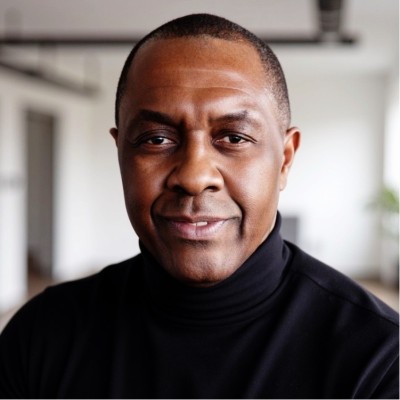 Michael L. WoodsonFractional CISO, Chief Cybersecurity Strategist @ Onyx Spectrum Technology
Most enterprises still treat third-party risk management as a questionnaire exercise. Send a form, score the vendor, revisit in six months. That cadence was built for static software environments where a vendor's risk profile held relatively steady between assessments, but AI has dismantled that assumption. Models evolve mid-contract, features ship without notice, and autonomous agents now transact on behalf of vendors who themselves rely on other models trained by other sources. The risk surface is no longer something you review. It's something you watch.
Michael L. Woodson is Fractional CISO and Chief Cybersecurity Strategist at Onyx Spectrum Technology, a professional services firm specializing in cybersecurity compliance, legacy system support, and technology consulting for government and private-sector clients. With over two decades of experience spanning financial services, public transit, hospitality, and federal law enforcement, including a role as CISO at the Massachusetts Bay Transportation Authority, Woodson now advises boards and executive teams on AI governance, supply chain cyber resilience, and enterprise risk strategy.
"AI risk is no longer a once-a-year assessment. It's a real-time discipline, sometimes a twice-a-day discipline, because the models are evolving as fast as the business," says Woodson. The core problem, he argues, is that traditional vendor risk frameworks assume a stable counterparty. AI breaks that assumption at every layer. Vendors roll out AI features quietly, without the press releases or disclosure cycles that would normally trigger a risk reassessment. A subscription that looked clean at onboarding may carry entirely different exposure six weeks later.
Feature creep becomes risk creep: "I entered into a contract. We did a risk review. But it's not a one-and-done anymore," Woodson says. "I want full transparency in the contract on any updates that could represent a risk to the organization. You need to fully disclose that. Immediately. I need to be notified." He describes weekly operational calls with key AI-enabled vendors as a baseline, not a luxury. "The days of yesterday's vendor management are gone. It really is a proactive, daily, hands-on collaboration."
Bots as vendors: Woodson points to what he calls agentic commerce, a category where AI agents function as de facto vendors, providing services, executing transactions, and operating with a degree of autonomy that existing procurement and risk frameworks were never designed to accommodate. "An AI bot registers with you as a vendor. But it's a bot. People have to get used to that," he says. Under the Uniform Electronic Transactions Act, electronic agents can already form binding contracts, meaning the legal infrastructure for agentic commerce exists even if the governance infrastructure does not.
That legal reality creates an accountability question that Woodson expects the courts will eventually have to resolve. Liability, he says, still rests with the human or corporate principal behind the agent. But as AI-driven threats grow more complex and decision chains stretch across multiple autonomous layers, proving who invoked what, using which method, with what level of continuous monitoring in place, becomes far more difficult to reconstruct after the fact.
Governance in all directions: Woodson's prescription starts with structure. "You're going to have to put a governance strategy in place. Not just one for people, but one that's operationalized throughout the organization. East, west, north, south," he says. That includes CISOs evolving into strategic advisors who understand AI implementation firsthand. "You can't delegate this. You have to be in first person on this one. Really understanding how AI aligns with the business, both short and long term."
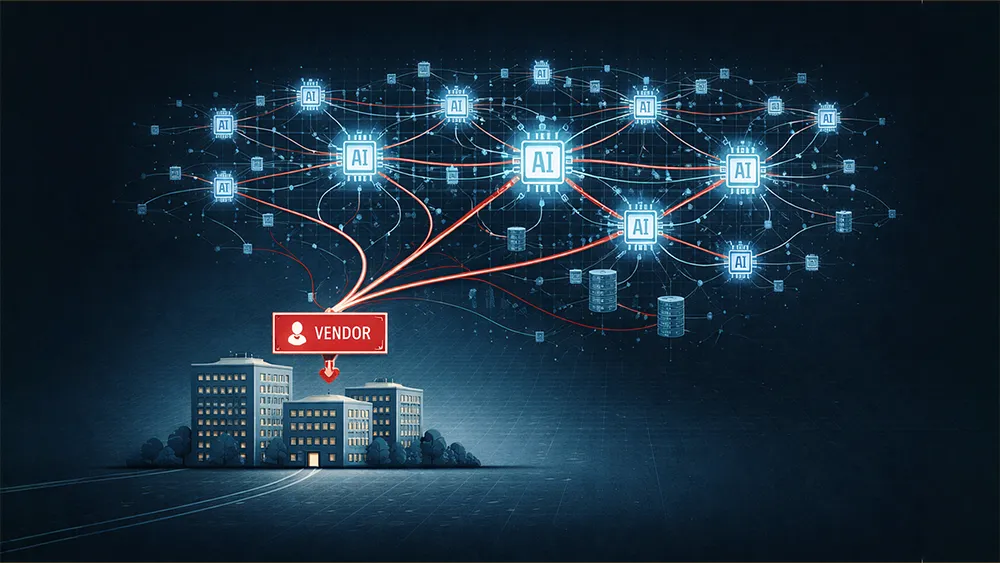
Audit your AI supply chain: Beyond governance, Woodson advocates applying supply-chain audit discipline to AI dependencies. Vendors use other vendors' models. Contractors build on layers of models that create complex, compounding security risks that most enterprises are not mapping past the third party. "People need to take the concept of distribution audit in the supply chain and apply it to their AI risk, their AI dependencies, and the bots and vendors providing those services."
The forward-looking risk, in Woodson's view, is not limited to governance maturity gaps or vendor opacity. It is the convergence of autonomous agents with raw computational power. AI agents orchestrating attacks at scale, potentially accelerated by quantum computing, represent a threat class that most incident response plans do not yet account for. And as regulatory frameworks and international safety efforts race to catch up, Woodson sees the gap between AI capability and institutional readiness as the defining risk of the next cycle. "The next major enterprise incident won't just be a data breach," he concludes. "It will be a decision breach, where an AI agent acts at machine speed without the right guardrails in place."